
Buy AutoTrafficRSS script now for $27 only!
We will send the script to your PayPal email within few hours,Please add FullContentRSS@gmail.com to your email contact.Source: The Differences Between #Google #Blogger and #WordPress
Buy AutoTrafficRSS script now for $27 only!
We will send the script to your PayPal email within few hours,Please add FullContentRSS@gmail.com to your email contact.Everything you need to know about SEO, delivered every Thursday.
Over the years, the Search Engine Result Pages (SERPs) have changed a lot. Features like news, images, videos and the Knowledge Graph have impacted the display, sorting and order of SERPs, dramatically impacting organic listings.
Recently, Google decided that paid search ads will no longer appear on the right-hand side of search results for desktop users globally, and up to four paid search results will appear at the top of the page (up from a maximum of three previously).
Paid search ads that fall below the fourth rank will appear at the bottom of the page, which has limited visibility to end users, for a total of seven ads per page max.
This is a big change, but how does it really impact organic search?
The answer is a number of different ways, which I will explore shortly. But before I do, let's examine why Google is doing this.
Like many companies, Google has seen mobile traffic grow at an accelerated pace over the past two years. This new layout makes the desktop experience very similar to the current mobile SERP. It will allow Google to provide more relevant results for end users and also provide better performance for advertisers.
The key here is the fact that Google is very good at understanding intent. Google can distinguish a transactional query from an informational query. So, if I did a search to buy a camera and got an organic listing first to download the manual, I would see that as bad user experience.
Alternatively, if I received a bunch of paid ads selling cameras and didn't even see any organic listings, that would be a better user experience. If four paid ads suit the intent, even if they push everything else down below the fold, it's still a good experience.
How does this impact organic search?Now that paid search ads are taking up more organic real estate, click-through rates for organic search listings — especially in the first two positions — will probably decrease because the organic results have been pushed farther down the page. Indeed, on mobile, we were already seeing SERPs where no organic listings appeared above the fold.
Since the organic search results will be relegated to further down the list, this will cause more advertisers to get more visibility from the top paid search ads, but it comes at a high cost.
If brands really want to get the most out of search, they'll need to create an integrated organic and paid search strategy with focus on top rankings and paid ads to maintain visibility and be in front of their target audiences.
This change will also make local search more important if you have a brick-and-mortar business, because end users will see paid ads, then the local pack, before even getting to organic results. This makes appearing in that local pack more critical than ever before.
This latest SERP change is going to impact the content that brands produce at all stages of the buyer journey, too. Modern consumer behavior has been characterized by Google as a series of intent-based moments ("micro-moments") enabled by the high usage of mobile, which can be described as "I want to know, I want to go, I want to do and I want to buy."
This is where the consumer comes into the fragmented path to purchase; the "funnel" that marketers often refer to doesn't exist. The path to purchase is no longer linear.
Therefore, you must have content to reach the user at different stages of the user journey to turn these people into customers. That means differentiating your paid and organic landing pages and creating content that suits each.
With more paid listings appearing for "highly commercial queries," you'll need to focus paid landing pages towards searchers in the buying/decision-making stages, whereas your organic landing pages should be better positioned (and possibly expanded) to capture visitors in the research/consideration stages.
In summary, it will be more important to rank in the first two organic positions to capture the most clicks and visibility from organic search.
Since the organic results are getting pushed farther down the page now, both paid and SEO must work together to make 1+1=3. Don't be afraid to compete with yourself and show the holistic value of integration.
Final ThoughtsThe SERPs will continue to evolve as Google looks for new and innovative ways to make the desktop experience similar to the current mobile SERP and provide the most relevant results for end users.
Agencies and brands must adapt to the dynamic landscape of the SERPs and put together results-driven strategies and tactics using both paid and organic search together to maximize ROI, capture more conversions and provide end users with relevant content in their moment of need.
Also, perhaps this is a good way to "train" end users into accepting paid-only results at times on mobile phones, especially because of the limited real estate on mobile devices.
Some opinions expressed in this article may be those of a guest author and not necessarily Search Engine Land. Staff authors are listed here.
About The Author Winston Burton joined Acronym in 2014 with over ten years in search marketing. Prior to joining Acronym, Winston was the VP of SEO at Havas Media, one of the world's top ten global ad agencies. He started the SEO practice for Havas and built the practice to include clients such as Choice Hotels, Fidelity, Exxon, Volvo and Marc Jacobs. Winston spearheaded SEO strategy including content marketing, mobile, link building, and all technical areas of SEO. Winston's career also included the SEO Manager role at Rosetta and time at Zeta Interactive. (Some images used under license from Shutterstock.com.)Get the latest news in local marketing each week.

I have a confession to make: Penguin scared the daylights out of me. I hope those of you who have been around the industry for as many years as I have will join me in taking the first step to recovery: admitting our problem.
In 2012, Penguin made once-easy and inexpensive link-building tactics for small businesses worthless — and in some cases, harmful. For a small handful of long-time clients, we had to undo years of work that had once supported their achievement of position one organic rankings (and more importantly, their acquisition of many, many leads).
Sadly, getting scared wasn't the only consequence of seeing businesses that had been fully compliant with SEO best practices (of the time) get burned overnight — because those best practices had suddenly changed.
It also made us overly cautious about link building for SEO, and that caution kept us from seeing what continues to be a reality: that backlink profiles are still key factors in organic search rankings, including for searches with local intent.
Mike Ramsey, my fellow Local University faculty member and owner of Nifty Marketing in Burley, Idaho, recently presented at MozCon Local 2016. His presentation and subsequent blog post featuring tons of local link-building ideas illustrated the gravity of my confessions above. (You can check out Ramsey's presentation slides here.)
As Ramsey rightly asserts, the Google Maps algorithm for determining relevance of businesses in the maps pack is closely tied to the Google organic algorithm. Google's Pigeon algorithm update sought to make locally relevant results more prominent in the search engine results pages (SERPs) and affected both Google Maps results and Google organic results.
This means that quantity, quality and diversity of backlinks are among the few SEO elements that, if done well, can support both types of ranking results.
So why have we been so hesitant to focus on link building for local businesses?
[Read the full article on Search Engine Land.]
Some opinions expressed in this article may be those of a guest author and not necessarily Marketing Land. Staff authors are listed here.
About The Author Will Scott is CEO of Search Influence, a national online marketing firm focused on small and medium-sized businesses, and white label online marketing products for publishers and media partners who serve them. Search Influence is the largest online marketing company on the Gulf Coast and New Orleans' only Inc. 500 honoree in 2011. (Some images used under license from Shutterstock.com.)Buy AutoTrafficRSS script now for $27 only!
We will send the script to your PayPal email within few hours,Please add FullContentRSS@gmail.com to your email contact.Buy AutoTrafficRSS script now for $27 only!
We will send the script to your PayPal email within few hours,Please add FullContentRSS@gmail.com to your email contact.The way 30 trillion web pages are ranked changed forever on October 26, 2015. That's when the world became aware of RankBrain, Google's machine-learning artificial intelligence system.
Google calls RankBrain, when it's in use, "the third-most important signal contributing to the result of a search query."
Google's mission: to terminate any web pages from its results that don't provide the highest-quality content and to find the most relevant answers for users.
Now marketers who want to gain precious visibility on always-shrinking organic SERPs must prepare to fight a new war: the war against the machines.
The pre-RankBrain machinesGoogle has sent two other major algorithms to strike at websites.
In the year 2010, Google sent a G-800, codename Panda, to hunt and kill the rankings of websites producing low-quality content.

Image from Grindstore
The second algorithm – a G-1000 known as Penguin – was sent in 2012 to find websites with unnatural link profiles and terminate them from the search results.
While neither algorithmic update was perfect, both succeeded in their overall mission. Now Google is sending a third.
RankBrain: analyzing page relevance on a 1-10 scaleNow, as before, Google has sent a G-X, a new machine learning system that will change SEO and the organic search results as we've known them.
RankBrain will analyze web pages for relevance. Every page will get a score between 1 and 10, with 1 being a dubious result and 10 being extremely strong.
But wait! This RankBrain technology is eerily derived from earlier G-350 technology. You may know it better as Google AdWords' Quality Score. This intelligent AdWords technology never needed external signals (e.g. links) to rank paid search ads for relevance. Soon it will be the same for organic search.
Is this it? The SEO apocalypse? Whoa, oh, oh, oh, oh.
No, it isn't. I've come from the future to share the secret solutions used in the past to help you today as your prepare for the rise of the machines.
A group of resistance fighters have already fought, and won, great Quality Score wars. Resistance fighters like myself, Frederick Vallaeys, and a squad of highly-trained AdWords Quality Score experts have learned to fight back and win. Now it's time to share our intel on how to defeat RankBrain.
There's no fate but what we make. Today I'm sharing four key strategies to prepare for RankBrain in order to prevent your website from facing Judgment Day.
Hang on… Judgment Day? Overdramatic much?
Imagine one day you wake up to find your website gone. Just gone. The fate of your site decided by a new order of machine intelligence in just a microsecond.
In the future RankBrain will take over the search results. All of them. In one possible future, Judgment Day happens on September 27, 2018* – Google's 18th birthday. (*Standard Time Travel Causal Loop Disclaimer: igve or take a few months – time travel and navigating these time lines is quite tricky!)
For now, RankBrain is mainly used on complex long-tail search queries. But assuming RankBrain will only ever be used on long-tail queries would be dramatically underestimating its potential.
Google has pointed out that 15% of the millions of queries it handles have never been searched before. Additionally, for upwards of 99% of content across the web, Google simply doesn't have enough signals (insufficient link and historical page data) to determine the most relevant search result for users. There are also whole niches that lack reliable natural link data (authoritative sites rarely link to porn, for example).
So now, with RankBrain, Google is learning in a very advanced way exactly what people click on and whether or not they are satisfied with the result when they click through.
Yes, Google is only using it on some queries for now. But when you create a new system like RankBrain, you wouldn't initially test it on your big-money head terms – just as you wouldn't replace a wildly successful paid search ad with an experimental one. You test on the things you're least confident in.
There's less downside and risk if Google's RankBrain results aren't as good in the early days. They will learn and come up with better answers based on analysis of user success metrics. Over time, Google's confidence in RankBrain will grow and the signal will get more and more weighty.
Judgment Day is when RankBrain becomes the #1 ranking factor.
The link and on-page SEO signals won't go away completely (they can always be used to corroborate other factors). But one day, they won't be the most important factor in rankings. RankBrain will.
Rand Fishkin has warned SEOs of the possibility of a future where Google leverages algorithmic inputs for search rankings without requiring human intervention – an idea which was predictably dismissed by Google (what would you expect them to say…)
A relevance score. That sure sounds a lot like Quality Score, doesn't it? Google already uses a relevance score with AdWords, the Display Network, YouTube Ads, and Gmail Ads. They just call it Quality Score. It's been so wildly successful that Twitter Quality Adjusted Bids and Facebook Relevance Score are largely the same concept.
Organic search will be next.

Now, on to those four RankBrain strategies you'll need to survive in the new world.
1. High organic CTRs: your highest probability for SEO successGoogle uses its Quality Score algorithm to rate the quality and relevance of your keywords and AdWords ads. Click-through rate, the relevance of each keyword to its ad group, landing page quality and relevance, ad text relevance, your historic AdWords performance – all of this ultimately determines your cost per click and your ad rank in the ad auction process.
The key to beating the Quality Score algorithm is just a matter of beating the expected click-through rate for a given ad spot. Important: There is no one expected CTR – CTRs will vary by time of day, device, location, and other factors.
This graph (based on WordStream client data*) maps Quality Score against the ratio of actual click-through rate to expected click-through rate by position. As you can see, the AdWords Quality Score algorithm is largely just a matter of beating the expected click-through rate for a given ad position.
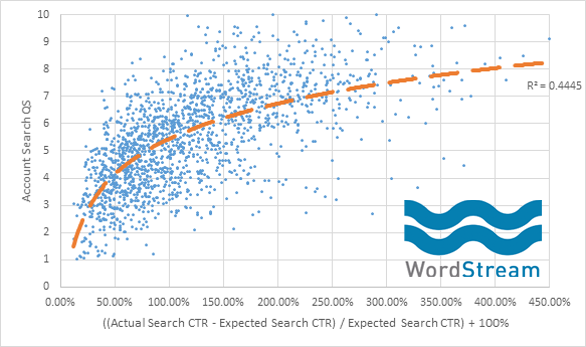
The better your ad does compared to the expected CTR, the higher your Quality Score.
By looking at millions of ads (from WordStream client accounts*) and averaging their click-through rates by ad position, we were able to reverse-engineer the expected CTR of an ad, and this is what we found:
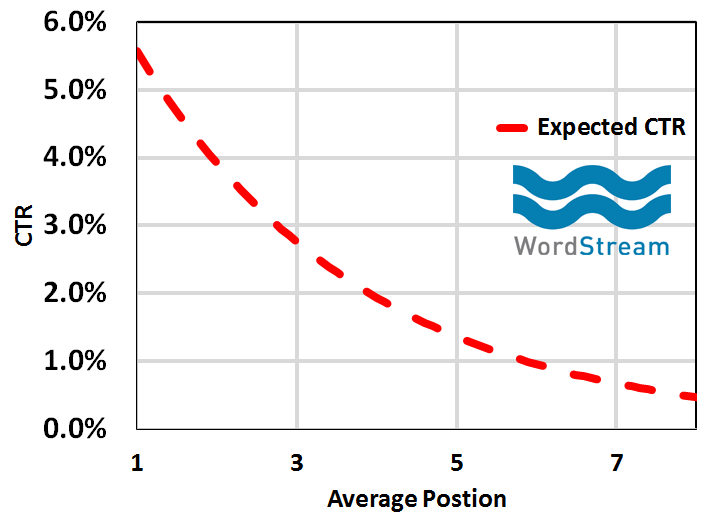
If your ad is in position 1, you don't have extra points for having a 5% CTR – Google expects your CTR to be that high when you're in that position. You need to do even better than expected to prove to Google that your ad is especially high-quality and relevant to users.
What does this have to do with SEO, in a world where 'content is king' and backlinks are critical to better rankings? Well, that's where you need to start adjusting your thinking.
The future of SEO isn't about beating another page based on content length, social metrics, keyword usage, or your number of backlinks. Better organic search visibility will come from beating your competitors with a higher than expected click-through rate.
Put simply: people are both the problem and the solution. RankBrain is learning from human decisions – specifically what they click on. Attracting higher click-through rates will be critical to your SEO success, just as it is the most important component of PPC success.
To figure this out, go into Search Console in Google Webmaster Tools. This will show you average position and click-through rates for the queries you rank for.

Figuring out what's a good click-through rate for organic search is beyond complicated. There are a lot of factors, like query type, number of ads, personalization, location, and the presence of Knowledge Graph, a featured snippet or other Google SERP elements (plus this data comes from the future and is not set in stone). But you'll notice right away that the CTR for your #1 rankings is super-high (over 32% for 'marketing ideas', above) compared to lower rankings, even relatively high average positions like 3 (under 3% for 'ppc', which Google interprets as a commercial query).\
In Google Organic Click-Through Rates on Moz, Philip Petrescu shared the following CTR data:
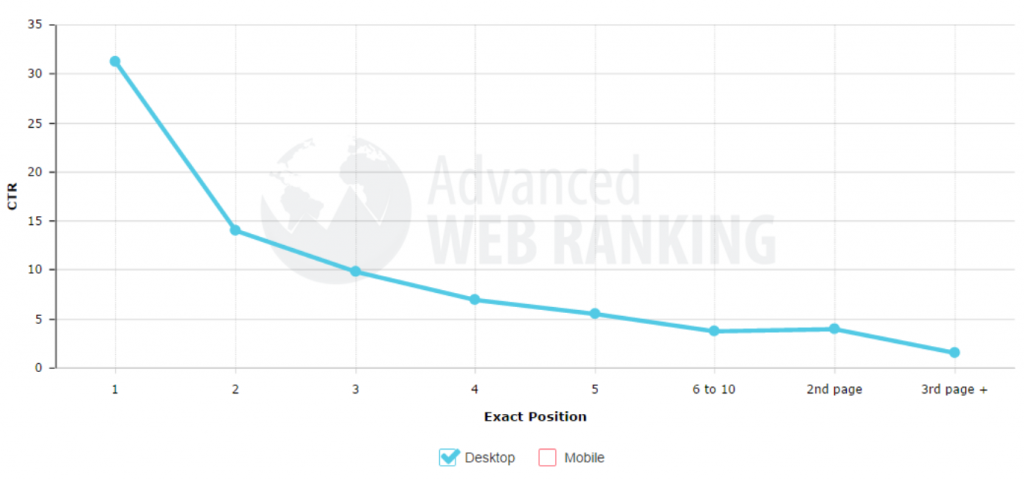
So, as a very basic example using the chart above, if you're in Position 1, and you have a CTR lower than 30%, you're in danger of losing your spot once RankBrain finds a relevant page with a better-than-expected CTR for its current position. If you have a much higher than expected CTR in a lower position (e.g., if you have a 15% CTR in Position 3), you should expect a bump up to at least the #2 position.
But again, CTR varies greatly based on so many different factors that simply using these static benchmarks isn't a perfect approach. What's an SEO to do?
Thankfully the notion of trying to achieve an above average click-through rate is not a new concept, at least from a PPC marketer's perspective, and there are ridiculously smart PPC tactics that SEOs can borrow from.
Keep in mind: PPC marketers obsess about getting high Quality Scores (which is essentially above average CTRs for your query type and average position). It's among the most important AdWords success KPIs. Below average CTR results in terrible things.
Figuring out your "organic Quality Score"The challenge is that in SEO, Google doesn't provide you with a Quality Score number to tell you if your content is above or below the expected click-through rate. But I've developed a hack to determine which of your keywords are most likely underperforming compared to the expected click-through rate: The Larry RankBrain Risk Detection Algorithm.
Just download all of your query data from Webmaster Tools and plot CTR vs. Average Position for the queries you rank for organically, like this:

Next, plot an exponential trend line. The queries that fall below your average CTR are your queries that are likely most at risk for future RankBrain updates. Conversely, the queries that score above the trend line are most likely to get a boost from future RankBrain updates.
If you then do a secondary sort on your most 'at risk' pages using a metric like pageviews or conversions generated by those keywords, you can prioritize your optimization efforts on the most important, most at-risk pages on your site. The Larry RankBrain Risk Detection Algorithm is very similar to what PPC marketers do on a regular basis – which is to prioritize the optimization of low Quality Score keywords and ads first, because that is where you have the least risk (it's less risky to fix your losers) and most potential upside.
Bottom line: you must beat the expected CTR for a given organic search position. Optimize for relevance or die.
2. How to optimize your SEO headlines and descriptions for above average CTR'SEO' headlines (title tags) and meta descriptions do okay. But keyword-optimized titles are the equivalent of 'Dynamic Keyword Insertion' for PPC ads. Take a look at the WordStream client data* below for ads with DKI. They generate above-average returns:
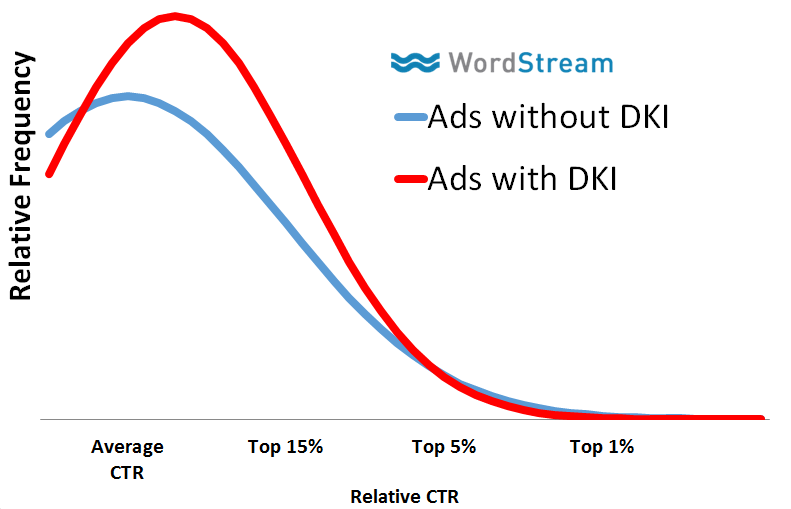
However ads using DKI are actually less likely to produce ads that are among the top 5% or top 1% of ads with highest click-through rates, normalized by ad position (AKA unicorn status).
Just look at these ads for [big data solutions].
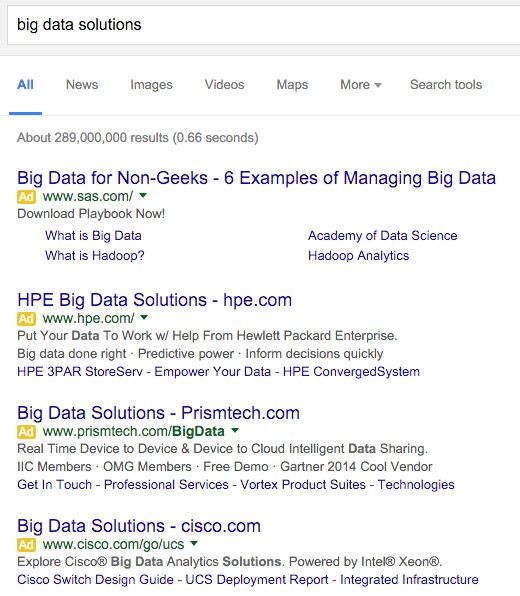
These ads are OK, I guess. They probably perform well enough. But, like many search-optimized titles, they're also pretty boring, generic, and average. I don't want to click on them. Do you?
To beat RankBrain, 'Okay' isn't enough. Your organic listings must have REMARKABLE click-through rates.
Our research into millions of PPC ads has shown that the single most powerful way to increase CTR in ads is to use emotional triggers. Like this PPC ad:

Tapping into emotions will get your target customer/audience clicking! Anger. Disgust. Affirmation. Fear. These are some of the most powerful triggers not only drive click through rate, but also increase conversion rates.

Don't make changes willy-nilly. Test out headlines as paid search ads or as social media updates linking to your content using different headlines – look at click through rates. Audition your headlines, eliminate the losers and use your winners as your SEO titles.
By no means should you forget about keywords and focus just on the emotion. Focusing on just keyword optimization or just emotion is a recipe for average titles and descriptions. Plus, without keywords, how will Google even know to try out your content on the SERP and see what kind of CTR it gets? (Google does this regularly with ads; that's how it knows if your ad beats the expected CTR for its position or not.)
No, you need to combine keywords and emotional triggers to create SEO superstorms that result in ridiculous CTRs and leave your competition devastated.
Bottom line: use emotional triggers + keywords in your titles and descriptions if you want your CTR to go from okay to great.
3. Optimize for task completionOne of the hidden things that Quality Score measures is task completion rates (i.e. conversion rates). Google definitely knows what your conversion rates are.
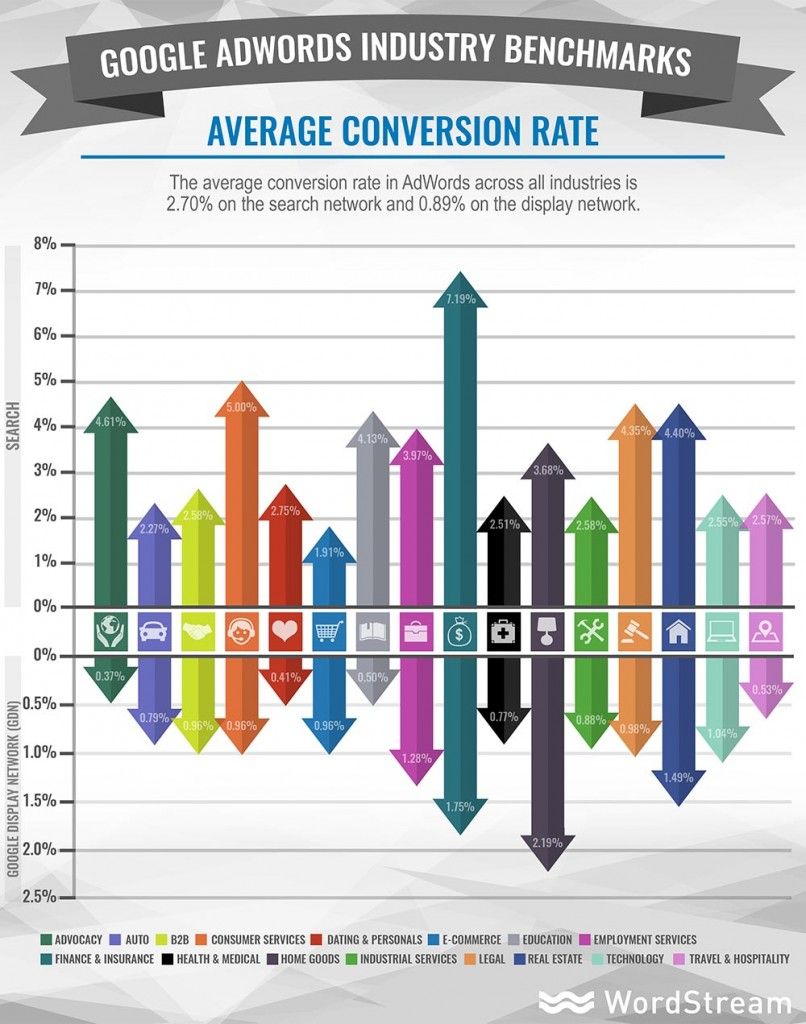
How the heck does Google know your conversion rates? Well, the machines have learned to tell whether traffic to your site converts.
Now in organic search, a conversion may not equate to completing a form. If you're pushing a piece of content, Google can look at engagement metrics like time on site and bounce rate, because higher engagement correlates with higher interest/relevance.
Google has seven products that boast more than a billion users – Android, Chrome, Gmail, Maps, Play, Search, and YouTube. So Google can tell in a lot of different ways when signed-in users are successful or unsuccessful at their tasks.
Plus, Google Analytics tracks millions of sites. And Google gets tons of insanely valuable data from AdWords – task completion technology was rolled out to advertisers as smart goals, a way to track conversions on advertiser websites without having to install additional conversion code.
Basically, you need to strive to have higher than anticipated or expected engagement metrics, based on a variety of criteria, including query and device type, location, and time of day. Your task completion must also be better than other similar sites.
Let's say you work for a tech company. Your visitors, on average, are bouncing away at 80% for the typical session, but users on a competing website are viewing more pages per session and have a bounce rate of just 50%. RankBrain views them as better than you – and they appear above you in the SERPs. In this case, the task completion rate is engagement.
Bottom line: if you have high task completion rates, Google will assume your content is relevant. If you have crappy task completion rates, RankBrain will penalize you.
4. Increase search volume & CTR using social ads and display remarketingPeople who are familiar with your brand are 2x more likely to click on your ads and 2x more likely to convert. We know this because targeting a user who has already visited your website (or app) via RLSA (remarketing lists for search ads) always produces higher CTRs than generically targeting the same keywords to users who are unfamiliar with your brand.
So, one ingenious method to increase your organic CTRs and beat RankBrain is to bombard your specific target market with Facebook and Twitter ads. Facebook ads are proven to lift mobile search referral traffic volume to advertiser websites (by 6% on average, up to 12.8%) (here's the research).
With more than a billion daily users, your audience is definitely using the Social Network. Facebook ads are inexpensive – even spending just $50 dollars on social ads can generate tremendous exposure and awareness of your brand.
Another relatively inexpensive way to dramatically build up brand recognition is to use the power of Display Ad remarketing on the Google Display Network. This will ensure the visitors you drive from social media ads remember who you are and what it is you do. In various tests, we found that implementing a display ad remarketing strategy has a dramatic impact on bounce rates and other engagement metrics.
Bottom line: If you want to increase organic CTRs for your brand or business, make sure people are familiar with your offering.
People who are more aware of your brand and become familiar with what you do will be predisposed to click on your result in SERP when it matters most, and will have much higher task completion rates after having clicked through to your site.

Aspiring RankBrain spammers, take note:
Marketers are famous for taking any technique that works and beating it to death. We've seen dozens of once-effective link-building methods get crushed (Wikipedia and forum spamming, comment spamming, embeddable widgets and infographics, guest posting exchanges, etc.) because of this sequence of events:
I know some of you are reading this article and thinking, "If CTR affects ranking, I can game the system!"
A word to the wise: Don't go down this road. DO NOT try to outsmart RankBrain using bots. RankBrain is very strong. Google has been building PPC ad click-fraud detection systems for over 15 years now. You cannot beat a bot at their own game.
RankBrain: rise of the learning machinesAn unknown SEO future rolls toward us. But now you can approach it with a sense of hope.
You must take the necessary precautions. Ensure above average click-through and task completion rates for your main organic keywords before Judgment Day, at which time the computers will take over the ranking, much like how it is done in AdWords using no external inputs (e.g. links).
The future of SEO isn't set. There's no fate but what we make for ourselves. It is our destiny to survive Judgment Day, together.
Never stop fighting. The battle against RankBrain has just begun. You are our only hope. Join the SEO resistance!
*Data sources:Conversion rate data is based on a sample of 2,367 US-based WordStream client accounts in all verticals (representing $34.4 million in aggregate AdWords spend) who were advertising on Google AdWords' Search and Display networks in Q2 2015. "Averages" are technically median figures to account for outliers. All currency values are posted in USD.
Click-through rate data is based on a sample of approximately 2,000 US-based WordStream client accounts in all verticals who were advertising on the Google AdWords search network in Q3 and Q4 of 2013.
Graham Charlton is Editor in Chief at ClickZ Global.
Related readingThe importance of headlines should never be overlooked, a little time spent finding the right headline can make a lot of difference. ... read more
Google had already revealed that RankBrain, its artificial intelligence system, was the "third most important signal contributing to the result of a search query". ... read more
How much SEO knowledge does a journalist need? Is it a key part of the job in the modern world, or should ... read more
The practice of brands engaging with popular bloggers seems to have caught Google's attention, with the search engine offering some advice on ... read more
Buy AutoTrafficRSS script now for $27 only!
We will send the script to your PayPal email within few hours,Please add FullContentRSS@gmail.com to your email contact.

