
Buy AutoTrafficRSS script now for $27 only!
We will send the script to your PayPal email within few hours,Please add FullContentRSS@gmail.com to your email contact.Source: How Content #Marketing Plays Into #SEO (and Vice Versa)
Buy AutoTrafficRSS script now for $27 only!
We will send the script to your PayPal email within few hours,Please add FullContentRSS@gmail.com to your email contact.
Local SEO is competitive and fierce. With more and more local businesses vying for the Google local three-pack — and ads and online directories occupying a large percentage of the remaining SERP real estate — your local SEO strategy has to be aggressive.
So, what can you do to outrank your local competitors down the street, especially when you've all got the basics down? One approach is to use local SEO tactics that your competitors may not know about or aren't using. Here are five local SEO tactics you can implement to help get ahead of your competitors.
Google PostsFirst, every local business should claim their Google My Business (GMB) listing. It's a must-do. Non-negotiable. If you don't claim your Google My Business listing, you essentially don't exist online! (Okay, that's an exaggeration — but not claiming your GMB listing will significantly diminish your chances of showing up in local search results.)
Of your competitors who claim their Google My Business listing, most will just walk away and forget about it. However, claiming your listing and letting it sit there gathering dust is like purchasing a new home and not putting any furniture in it. There's so much more you should do, and this is one way you can outsmart (and outrank) your competitors.
Google has insight into how you and your potential customers are engaging with your Google My Business listing — and generally speaking, the more activity, the better. Does someone use the click-to-call option on their smartphone? Is a potential customer asking you a question using the new Q&A feature? Did you answer the question? Are you updating your business hours for holidays? Are you uploading quality photos of your business or staff?
And are you utilizing Google Posts?
Google Posts are almost like mini-ads with a picture, description, offer, landing page URL and so on. You can create Posts that tell potential customers about a product or service, promote upcoming specials, offer holiday wishes, let customers know about an event you're having, and more. Having an open house? Create a Post for that event. Offering a free report or white paper? Create a Post about that white paper and add the link to where people can go to download it.
Creating a Post is easy. Simply log in to your Google My Business dashboard, and to the left, you will see the Posts option. Click on it to get started creating your first Post!

Whether you're creating a post about an upcoming event, sale, special offer, product or service, try to include keywords relevant to your business and city in the copy of the post. (It can't hurt!) Make your post compelling so that people who see your GMB listing will want to click on the Post to learn more. (Remember, Google is watching those interactions!)


Once you've created your post, here's how it will look on your Google My Business Listing:

To make sure that the Posts are timely, Google removes Posts after seven days (or, if you set up an event, the Post will be removed when the event date has passed). To keep you on your toes, Google will even send you email reminders when it's time to create a fresh new Post.

Does creating a Google Post help your local rankings? The verdict's not 100 percent in, but Joy Hawkins and Steady Demand did some research, and they found that Google Posts did appear to have a mild impact on rankings.
Check your Google My Business categorySpeaking of Google My Business, selecting the best GMB category for your business can make a huge difference in how your business ranks on Google. If you find your competitors are leapfrogging ahead of you on the local three-pack, scope out what category their business is listed under — you may want to experiment with selecting that same category.
If matching your competitors' categories doesn't move the needle for you, try getting more granular. (Yes, this is a case of trial and error. You may need to test until you find the right category that will get you better visibility and/or more qualified leads.) See the example below, where one of my clients jumped up on Google rankings when we changed her category from the more general "Lawyer" category to a more specific category, "Family Law Attorney."
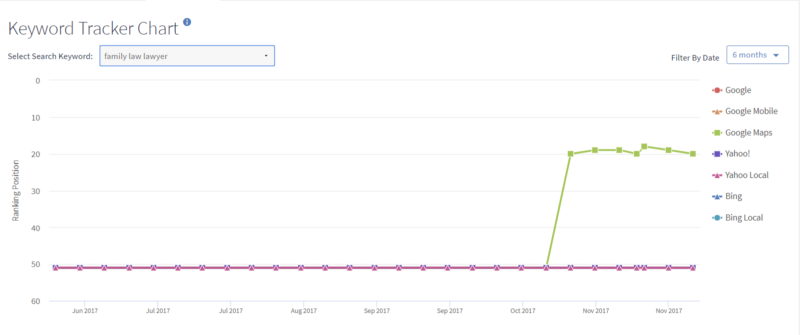
It's always best to choose the category that most accurately fits your business type. Sometimes, people select too many categories, which can "dilute" your specialty. Selecting the best category for your business is a strategy that may mean you fall before you rise — but once you find the "sweet spot," you can outrank your competito rs.
Apply URL best practicesURLs are an important part of your search engine optimization and user experience strategy. Not only do URLs tell your site's visitors and search engines what a page is about, they also serve as guides for the structure of your website. Your URLs should be descriptive, user-friendly and concise. When appropriate, include keywords (like your city, the name of a product, the type of service and so on) in the URL.
If your website runs on a CMS, you may have to adjust the settings to ensure that your page URLs are SEO-friendly. For example, WordPress URLs have a default format of /?p=id-number, which does not adhere to SEO best practices and is not particularly user-friendly.
To fix this issue, you need to create a custom URL structure for your permalinks and archives. This improves the look of the URL for visitors and people that share your link, and it also allows you to add relevant and local keywords to a page's URL.
To fix this WordPress default setting, log in to your WordPress dashboard and go to Settings and click on Permalinks:
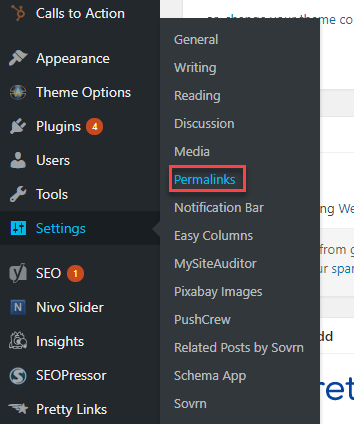
There you will be able to change your setting to "Post Name." Changing this setting will allow you to create SEO-friendly URLs like:
https://websitename.com/products/blue-widgets
Please note that after you change the permalink structure on your website, you may need to create redirects from the old URLs to the new ones (assuming your CMS doesn't do this automatically).
Make your site secureIf your site isn't secure (i.e., not HTTPS), making it secure is something you should add to your to-do list. In January 2017, Google started showing "not secure" warnings for Chrome users on HTTP pages with a password or credit card field. And, as of October 2017, they've expanded this warning to display when users enter data on an HTTP page, and on all HTTP pages visited in Incognito mode.

Even worse, their goal is to eventually display this warning on all HTTP pages. With all the press about cyber-security and protecting your personal information online, seeing this "Not Secure" warning on your site could scare off potential customers. Google is essentially warning people not to visit your site. Since many people are apt to close a website if they see a security warning, that means you could be losing a lot of business.
The bottom line: If your site's not secure, you could be losing business to competitors.
(For a primer on making the switch from HTTP to HTTPS, check out this guide by Patrick Stox: "HTTP to HTTPS: An SEO's guide to securing a website.")
There are immediate benefits to having a secure site, too. If you have a secure site, the https:// and the green locked padlock that appear next to your URL in Chrome will make your website seem more trustworthy than a competitor's site that isn't secure.

And, of course, Google has stated that secure sites receive a slight rankings boost. Though this boost is fairly minor, it could still give you an edge over a competitor, all else being equal.
Write quality content: End writer's blockNot only does Google like fresh, relevant, high-quality content — your site visitors do, too.
When it comes to writing long-form content, however, some people freeze up with writer's block. How can you determine what to write about in order to satisfy users and drive relevant traffic?
Rest easy. There are amazing tools out there that can help you find the most popular questions people ask about a particular topic, and these types of questions and answers make for great content fodder.
Each of these tools has a different algorithm they use to find popular questions that need answering, but many pull top-asked questions from Google, various user forums, Quora, e-commerce sites and more. Finding these questions and writing a piece of content that answers those questions can squash writer's block — fast! Now you can write content that actually answers questions potential customers are really asking.

Here are just a few of the "content crushing" tools I use:
I'd love to know what local tactics are giving you a competitive edge in rankings. Are you using any of the tactics above? Different ones? Let us know!
Opinions expressed in this article are those of the guest author and not necessarily Search Engine Land. Staff authors are listed here.
About The Author Sherry Bonelli has 19 years of digital marketing experience. She specializes in SEO, Reputation Marketing, Social Media, Content Marketing, Retargeting and Display Advertising and other integrated digital marketing strategies that help make local and national businesses successful online. She LOVES combining digital strategies to get results! Sherry holds a Master of Internet Marketing and is a frequent speaker at industry events and webinars. She is also a contributing guest columnist on leading digital marketing websites. As a SCORE mentor for the SCORE East Central Iowa chapter, she enjoys volunteering her time to help small- to medium-sized business with their digital marketing strategies. Sherry is the owner of early bird digital marketing, a digital marketing agency that helps businesses get found on the Internet. She also serves as BrightLocal's local search evangelist.
Buy AutoTrafficRSS script now for $27 only!
We will send the script to your PayPal email within few hours,Please add FullContentRSS@gmail.com to your email contact.How to Boost Database Development Productivity on Linux, Docker, and Kubernetes with Microsoft SQL Server 2017 REGISTER >
It is not uncommon for beginners to under-utilize SEO plugins in WordPress. Often, they read a few guides online on how to start your own blog/website, and do the steps specified in these blogs without fully understanding the implementation part of things. Simply installing plugins is not enough; the blogger must do a lot more to optimize his or her blog posts.
In this article, we will discuss the essential tips that one must follow for optimizing the on-page SEO ranking factors of a blog post.
Of all the plugins available for building a blog using WordPress, Yoast SEO is the simplest and most comprehensive on-page SEO plugin. With Yoast SEO, you can track the usage of your primary keyword across the different elements of a post. We will discuss on-page SEO keeping Yoast in mind.
1. Go Beyond Only Focusing on KeywordsA focus keyword is just the main keyword, but people don't always search the same way; they may search for specific product or service containing the focus keyword as a part of a long phrase. They could also search for a synonym of the keyword.
Such specific versions of main keywords are called long tail keywords and these longer versions of the focus keywords rank much better than the focus keyword.
With WordPress SEO by Yoast, you can optimize for a single focus keyword in the free version. There is a comprehensive list of elements on the page that are tracked by SEO for the focus keyword. However, if you pay $89 for the Premium version of Yoast SEO (one site only), you can optimize for up to 5 different keywords. This will help you optimize on-page factors and rank for multiple focus keywords or synonyms.
2. Make Your Post Title SEO FriendlyOn-page SEO is a lot more than just inserting keywords in the headings; there are many checklist items such as meta descriptions, tags, and categories, etc., that must be considered for a properly (on-page) optimized blog post.
Your blog post title is the first part users see on search engines. An optimized title should:
To make your blog post title catchy, you must convey the advantage of reading your blog post over that of your competitors who may be ranking above or below you on Google SERPs.
You should use catchy adjectives to make your blog title stand out among the crowd in search results. For example, instead of writing "Top 5 WordPress SEO plugins with their pros and cons," you could use something more like "Top 5 WordPress SEO plugins to skyrocket your blog traffic."
3. Do Not Forget Your Meta DescriptionsMany people think that Meta descriptions do not hold much value today. On the contrary, all that users see are the titles and descriptions on the SERP. It also appears on social media platforms such as Facebook, Twitter, Google +, etc. Google gives them equal importance along with other SEO ranking factors.
The reason is that a good Meta description explains a lot about an article; it helps search engines understand what your article is all about. So, here are a few shortcuts to a good Meta description:
Categories and tags provide extra information about your blog post, which makes it easy for search engines to understand your articles. Besides, if you can incorporate your main keyword into categories and long tail keywords in tags, you will make your content a lot more relevant for search engines.
An important thing to remember here is that blogs evolve. When you're starting out, you might have only two broad categories under which you write content. But as you grow, you could develop multiple sub-areas within your niche and you'll also become more capable of further sorting out your content into several categories (and even sub-categories).
Before making any changes to the category structure of your website, make sure you plan out how and when you will change the categories of each and every piece of your content.
5. Tame the Beast of Internal LinkingThere are several reasons you would want to increase your internal linking. From an SEO perspective, internal links show search engines about the number of related posts users can expect on your entire blog site, not just one post. When users come to your article, they seek information and gain knowledge. As knowledge increases, they might form more questions as well. This is where your internal links come in.
Internal links are created to showcase more important and closely related topics that could not be covered in the main post. To see if you can create more internal links, look at the categories of your blog and see how they are interlinked with the category of the main blog post which you are optimizing. If you have many related topics, you could link users to a search page or a category page on your website for that keyword.
While internal links help a lot in keeping the bounce rates down and enhance your user engagement, too many internal links may actually be counter-productive as they pollute the reading experience. The user could suddenly open 5 other pages on your website. Too many open tabs might distract the readers; there is no guarantee of the user returning to the original page.
6. Keep it HumanUltimately, the visitors do all the actual reading; search engines just bring your content to the audience. Content written keeping only keywords in mind turns out to be quite monotonous and boring.
Don't get so involved in optimising SEO practices that you ignore the quality of the material you're supplying to your user. Remember this, Content is always King and SEO is just a "public relations officer" for the King. Without great content, SEO optimization will not be enough.
People spend much less time reading online content than print publications. They prefer quickly scanning through your content no matter how great it might be. Here are a few suggestions for optimising the readability of your content:
By creating content that is easy and interesting to read, adding catchy titles, useful categories and tags, Meta descriptions, etc., one can ensure that their blog posts are reaching out to the maximum number of people organically — thus improving search results and user experience.
About the AuthorCatherrine Garcia is a freelance blogger and web developer. She is currently working as a freelance writer at MarkupTrend and managing content. You can follow her on Twitter.

Buy AutoTrafficRSS script now for $27 only!
We will send the script to your PayPal email within few hours,Please add FullContentRSS@gmail.com to your email contact.
Buy AutoTrafficRSS script now for $27 only!
We will send the script to your PayPal email within few hours,Please add FullContentRSS@gmail.com to your email contact.Technology is ever advancing and ever evolving. Technology changes and updates as fast as we can blink. To be on top of the Search Engine Optimization or SEO, website administrators must keep up with the changes or advancement in technology for search engine ranking. Since Google is the pioneer in the field of search engines, it is quite logical to keep up with Google's algorithm update. Any website aims to achieve search engine ranking and to appear on top when the keywords are entered in a search engine page. So, you must keep an eye on the emerging trends in SEO updates for the year 2017.
Google has centered its operations on enhancing the web usage by its users, thus keeping track of the updates that are rolled out by them, helps the administrators to keep up the ranking of their websites. Google with a history of famous algorithm updates, search index changes and refreshes on a regular basis forms the crux of search engine rating module.
To find the latest Google SEO updates, administrators must keep track of the following algorithm updates.
Google Hummingbird UpdateGoogle Hummingbird Update, introduced in 2013, was Google's new search algorithm that still plays a significant role in deciding the ranking of websites. Made up of 200+ factors, they affect the search results and website ranking. The boom in the smartphone market has led to this most significant change in the Hummingbird with the enhancement of its capabilities to keep a sharp eye on the mobile marketing trends. Hummingbird is precise and fast and can decipher the meaning of an entire phrase, thereby making the search results better and useful.
Updates on Hummingbird are:
Google started the Penguin update on April'12 with the sole aim of catching sites that were spamming Google's search results and using unscrupulous means to increase their website ratings on SERP's. With this update, Google was able to penalize sites with spams and stolen content. Before the Penguin update was initiated, many websites were using manipulative methods to gather traffic for their sites and increase their ratings.
SEO audit by TemplateMonster Service CenterDo you need your website be visible to your target audience in search engines and you don't know where to start? SEO audit is the first step to creating an online marketing strategy that really works. You will get the analysis and guidelines on how to implement the given recommendations on your website.


The boom in the smartphone market led the Google to provide far more updated versions to profit the large numbers of mobile users. The algorithm was intended to make the sites more mobile friendly for the phone users. The change was so incredible and significant that people are calling the day the change was introduced, people termed the day with names such as Mobilegeddon, Mobilepocalyse, Mopocalypse or Mobocalypse. Google has launched a tool to test if your site is according to its guidelines and is mobile friendly.
SEO Foundations For Small Business Owners [Free eBook] Google Pigeon UpdateGoogle's Pigeon update, another search algorithm update was introduced in order to add more significance and value to the search results that helped in better ranking of the worthy websites. This update helped in enhancing their distance and location tracking parameters while yielding better search results. Google maps were made better and more efficient with the Pigeon update as this update lets Google know the user's location and listing in the directory. The Pigeon update is far more helpful to the local businesses as the primary focus of this update was to provide preference to local search results in SERP's.
Latest updates in SEO according to the Google Pigeon Updates are:
The panda update was initiated to stop low-quality content from appearing on top of the SERP's and was highly effective in catching hold of sites that got away during the upgrading process. Panda update was able to regulate the ranking of the entire site rather than a particular page.
Key features of Panda update:
SEO is the vital tool that a website can use to increase its visibility and traffic. Optimal use of the advancements and Google upgrades furthers its causes.

10 Valuable Google Chrome SEO Extensions
Top 30 SEO Tips & Tricks – How to Rank High on Google in 2017
5 Reasons User Reviews are Essential for Local SEO
What You Need To Know About SEO for Your Shopify Store
First Steps in SEO: How to Build a Strong Search Engine Presence From the Very Beginning
