
Buy AutoTrafficRSS script now for $27 only!
We will send the script to your PayPal email within few hours,Please add FullContentRSS@gmail.com to your email contact.Source: How to get started with local #SEO
Buy AutoTrafficRSS script now for $27 only!
We will send the script to your PayPal email within few hours,Please add FullContentRSS@gmail.com to your email contact.Higher rankings should lead to traffic increases, but what do you do when climbing rankings don't deliver increased clicks? Ranking on page one for target keywords is a first step, but it remains essentially meaningless if users aren't clicking on your result.
If you're struggling with low organic click-through rates (CTRs), your site's appearance in search results may not be standing out from the competition. It's possible that they don't cater to user intent, or they may simply be less exciting than the other results on the page.
One way to improve click-through rates is to optimize how your content displays on search engine results pages (SERPs). By creating search results that stand out on the page you can drive more traffic to your site, and the increased engagement may even earn you higher rankings.
Get Started by Identifying Underperforming PagesThe first step in optimizing search results is to find underperforming pages. This information can be found in Google Search Console by:

If five results appear in position one—three with CTRs of 30% and two with CTRs of 15%—the two pages with 15% CTR need to be optimized.
If there aren't enough pages and data to make this determination by comparison, refer to average CTRs by position:
Compile a list of pages with low CTRs. These are the pages with results that need to be optimized.
1. Craft Compelling SEO Page TitlesBack when Google served results mostly by matching character strings, it was crucial to include exact-match keywords in SEO titles. This led many sites to format titles like this: Search Engine Optimization | How to Optimize Your Site for Search. The titles were clear, but usually very boring and redundant.
Today, 53% of the top 20 search results use keywords in their SEO titles. Google is not dependent as it used to be on matching characters in title tags to serve results. Instead, it uses body text, sub headers, latent semantic indexing, and engagement signals to match results to queries.
And RankBrain is constantly reevaluating and adjusting which ranking factors are more important for which queries. Keywords are more important in some industries, and for some content topics, than others.
There are several best practices to consider when writing titles for search result display:


For pages with high rankings but low CTRs, consider updating SEO page titles to make them more compelling. Then, measure the results to determine if click-through rates improve.
You can also use Twitter to test possible headlines. Since it's not as frowned upon on Twitter to post multiple updates that link to the same content, play around with different titles, and post them to Twitter and see which earn the highest engagement rates.
2. Write Enticing Meta DescriptionsWell-crafted meta descriptions are another opportunity to inspire clicks. Meta descriptions are an extension of page titles, providing a promise to users about what they can expect to find after clicking a result. And because they aren't ranking factors, they can be used solely to entice users to click on results.
Effective meta descriptions:
Unfortunately, there's no guarantee that Google will display the meta description you've written. Google recently admitted that defined meta descriptions are the fall-back, not the default, for what gets displayed on a SERP. That means the search engine is looking for appropriate pieces of on-page content first, and only using the meta description you specify if it can't find good enough answers on the page.
Of course, this is no great surprise:
A search for "digital marketing analytics" produces this auto-generated description.
Recommended for You
Webcast, June 21st: 5 Keys to Operational Excellence
Google uses the first line of the specified meta description, but it chooses another section of the text to show a usage of the word "analytics" in the content.
First, make sure to include a variety of meta-description-worthy sentences and short paragraphs in the content for Google to pull out.
Alternately, including keywords in meta descriptions may increase the likelihood that Google will use the meta description you provided instead of generating its own. Additionally, Google displays matching keywords in meta descriptions in bold, which helps results stand out.
3. Customize URLsWhile URLs are less important than compelling and descriptive SEO titles and meta descriptions, they do display in search results so they should reflect the content of the page. Page URLs factor into searchers' perceptions of relevance: descriptive URLs get 25% more clicks than non-descriptive URLs.
If you're using WordPress or another content management system that auto-generates numeric URLs, make sure to update the URL before publishing to make it more relevant to the content.
If you need to update URLs for already-published pages, make sure to have a plan in place for redirects. Updating the URLs of pages may be a simple task, but it can create cascading negative impacts if you neglect to implement 301 redirects after updating URLs.
4. Use Structured DataMarking up pages with schema or microdata can result in more visual, detailed, or longer search results. Some examples of expanded results that can display when using markup include:
If you want to try your hand at adding structured data without bringing in the development team, Google offers a structured data markup tool that makes it easy to markup individual pages.
5. Optimize for Featured SnippetsThe best way to stand out in search results is by earning featured snippets. Featured snippets are expanded results that appear in position zero—above the number one result—for relevant queries. Often, featured snippets provide definitions, lists, or tables.
Featured snippets include a link to the page providing the information. They may also include a corresponding image, but the image and the snippet can come from two different sites.
The definition of marketing automation comes from HubSpot, but the image is provided by Pardot.
In testing the impact of featured snippets, HubSpot found that earning a featured snippet increased CTRs by 114%, even when their natural ranking was the number one spot.
The best way to stand out in search results and improve organic click-through rates is to optimize content for featured snippets:
With compelling SEO titles, enticing meta descriptions, descriptive URLs, and expanded search results from structured data markup and featured snippets, you can stand out in the SERPs and improve organic click-through rates. This will lead to increased organic traffic, and it may even lead to higher rankings.
Get started by identifying underperforming pages. Conduct a search for the keywords that populate your result, and see if featured snippets appear. If so, take time to optimize content to overtake that featured snippet, and watch click-through rates soar.

Buy AutoTrafficRSS script now for $27 only!
We will send the script to your PayPal email within few hours,Please add FullContentRSS@gmail.com to your email contact.SEO, which is the acronym for Search Engine Optimization, is today considered a norm for online business success in the digital marketing world. SEO is aimed at making your business grow by increasing the visibility and reach of your business on the World Wide Web or the internet.
That is to say, SEO optimizes your business website for better search engine rankings on the SERP. It makes sure that your website appears high in the natural or organic search results of various search engines such as Google, Bing, and Yahoo. The high search engine ranking translates into more visitors on your web portal, which, in turn, leads to increased conversion rate and business growth.
"Even companies that do big business online struggle to be noticed by Google users. The Web, after all, is home to some 120 million Internet domains and tens of billions of indexed pages. But every company, big or small, can draw more Google traffic by using search engine optimization – SEO, for short." – Jason Fried (Entrepreneur, Author & Speaker)
In the present times, no business could afford to overlook the role of SEO in getting success. Search Engine Optimization has become an indispensable business policy for most companies, big and small, who aspire to grow and prosper in this increasingly competitive world.
Benefits Offered by SEO to Your BusinessThough there are numerous benefits of SEO, we are discussing here the top five benefits offered by it to your business in order to make you better comprehend the need for Search Engine Optimization:
Today, when more and more businesses are getting online, the internet has become a crowded place with millions and millions of websites running. In this vast ocean of websites, search engines like Google are the only resort for the majority of web users for locating the desired website.
SEO plays a pivotal role in steering these potential buyers to your business website through the search engines. It does so by enabling your web portal to obtain a position on the first page, probably in the top ten search results, of the major search engines such as Google, Bing, and Yahoo. As a matter of fact, more than 90% of the searchers over the internet tend to click a link displayed on the first SERP, and the majority of these clicks are in the first ten search results.
#2 Enhanced Brand CredibilityAs said earlier, SEO enables your business website to appear on the first page of search results. This high ranking of your company's official portal goes a long way in establishing the faith of people in your company. Several studies have revealed that people are more likely to believe in businesses whose website continuously appears on the first page of search engines, rather than others. A high rank on Google is enough to provide a boost to your brand credibility.
#3 Better ROI & Cost-EffectivenessROI stands for Return On Investment. It is a very important parameter used for assessing the profitability of a business. This is basically the amount of return on an investment made in business; the more it is, the better.
SEO provides high ROI in terms of better search engine rankings and increased business. Unlike the online ad campaigns and other digital marketing activities, SEO does not demand any significant monetary investment. The returns may take some time to come, but the returns are much solid and lasting. SEO proves much more cost-effective in relation to other forms of online marketing.
#4 Facilitates Getting Competitive EdgeThe present business environment is fraught with cut-throat competition. There are thousands of players operating in every industry and they are making every possible effort to woo the customers.
In such a situation, SEO could enable you to get a competitive edge. If effective SEO activities are performed on your business website, it will surely stand out among the thousands of other websites offering the same products and services as yours. Without an effective SEO plan, a business cannot aspire to tap the vast online market.
#5 Facilitates Increasing Conversion RateSEO not only attracts more traffic to your business website, but it attracts relevant traffic as well. It makes use of on-page and off page optimization techniques to make the web page content most relevant to the visitors' requirements and preferences.
The clearly defined navigation, user-interface, uncluttered look, and other such website elements come under the purview of Search Engine Optimization. SEO makes sure that the website remains most relevant to the visitors and they have a pleasant browsing experience overall. In this way, it facilitates increasing the conversion rates.
It is quite evident from the above points that SEO has become a sine qua non for success in the online business. But, it is essential that you take the SEO services from a professional organization in order for them to be effective. A professional organization is expert at framing an effective Search Engine Optimization strategy and implementing it for your online business promotion.

Buy AutoTrafficRSS script now for $27 only!
We will send the script to your PayPal email within few hours,Please add FullContentRSS@gmail.com to your email contact.
At WooRank, we like to define SEO as "the strategies, tactics and techniques used to rank highly in search engine results for the keywords used by your target audience in order to increase your reach and conversions." However, marketers and website owners have to decide which tactics and techniques to focus on. Especially those with smaller teams, or doing it all themselves.
Often, this decision comes down to choosing technical SEO vs. content.
But which one is more important? Where should you focus your time and effort?
What Is Technical SEO?Technical SEO is, basically, the way your website is setup to help search engines read and/or interpret your page content, and to provide humans with a great user experience.
Technical SEO includes, but isn't limited to:
If you do some research, you'll notice that other than site speed, most aspects of technical SEO aren't ranking factors on their own. All things being equal, a site with a robots.txt file isn't necessarily going to outrank a site without one.
So why should you spend all this time working on something that's not going to give you a boost in SERPs?
Because technical SEO can have a huge indirect impact on your rankings, and your ability to even get indexed in the first place.
Think about it: without a robots.txt file or sitemap, Googlebot could waste all of its crawl budget trying to access a folder full of images or videos. Or, if you don't use canonical URLs, people linking alternate versions of a page will dilute your website's link juice. No structured data? Your Knowledge Panel isn't going to look too robust, either.
So, without technical SEO, your website isn't going to go very far with Google.
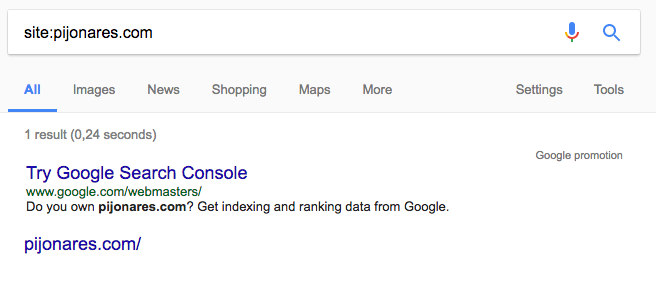
Poor Pijonares.
What Is Content Marketing?First a definition:
Content marketing is a strategic marketing approach focused on creating and distributing valuable, relevant, and consistent content to attract and retain a clearly-defined audience — and, ultimately, to drive profitable customer action.
– Content Marketing Institute
Second: a truism:
Content is king.
You've probably heard that before – it's been around since Bill Gates published it in 1996.
What makes content king?
Content is the whole reason people go to your website from search results. They want to read, watch or listen to whatever is on the landing page (and, hopefully, take an action based on that). Inbound marketing like SEO relies on quality content to attract leads and customers.
The Value of Content MarketingThe value of content marketing is twofold: SEO and conversion rate optimization.
Content has several SEO benefits:
Linkbait: When you do it right, content can work as natural linkbait. People naturally want to share high quality, valuable content. And the great news is that your content will help build the right kind of links: high quality and natural links.
On-page: Great content is also a great on-page SEO tool. In-depth, authoritative articles give you an opportunity to use keywords consistently throughout the page in their most valuable places like HTML headers, URLs, image alt text and at every level in the body content.
Evergreen content: Evergreen content takes the combined link and on-page benefits of content marketing and makes it last. If you manage to publish some really great evergreen articles, you'll continue to attract links and stay at the top of SERPs for a really long time. Take our SEO Guide on link juice, for example. This guide was published more than a year ago, but it's consistently been at the top of the SERP, both as a rich snippet and the top result.
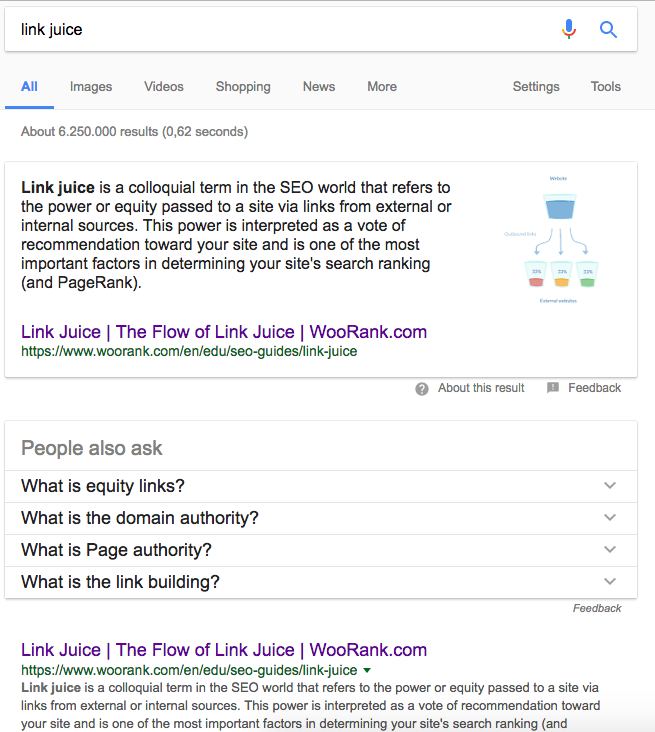
Good content marketing can also be super effective for your website's conversion rate. Which is really what we're all after, right?
Content, whether it's articles, infographics or video, helps you…
Both!
The fact is, doing one without the other is pretty pointless. What good is having a super fast site that's accessible to bots and humans if there's no content for them to access? On the flip side, what's the use of having great articles and videos if no one can find them (or wait around for the page to load)?
But there is a better way to do them both together to make each part more effective:
In terms of importance, technical SEO and content are equals. But when it comes down to where you'll spend most of your time, it's content marketing. Simply because you'll be creating new content on a weekly, or even daily, basis.

Buy AutoTrafficRSS script now for $27 only!
We will send the script to your PayPal email within few hours,Please add FullContentRSS@gmail.com to your email contact.


